Thimphu: The Capital of Stillness and Painted Wood
A journey through the winding roads of Gedu to the light-less streets of Thimphu, exploring the rhythm of a city that lives between tradition and a quiet modern pulse.
- 4 min read

The Road Finally Begins
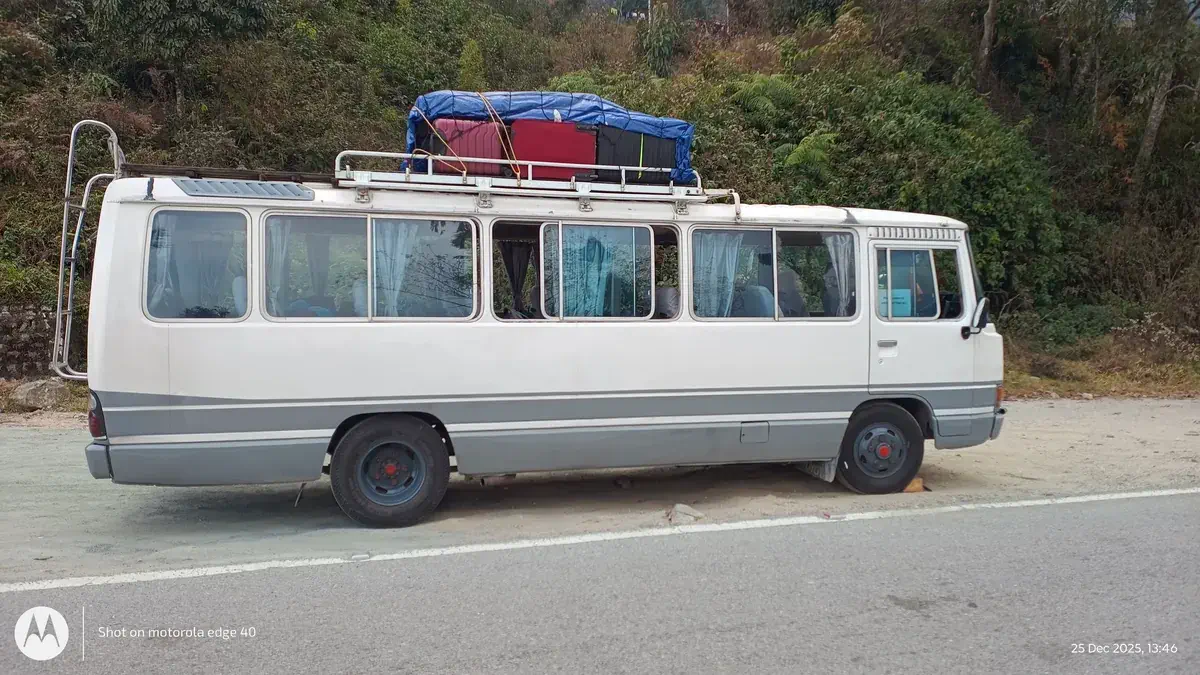
Leaving the border felt like shedding a skin. Until now, the journey had been a long sequence of transits—the rush of Gurgaon, the rhythm of the Rajdhani to Siliguri, and the crossing at Phuentsholing. But as our Coaster Bus began to tilt into the first few mountain bends toward Thimphu, it finally hit me: the trip has truly started.
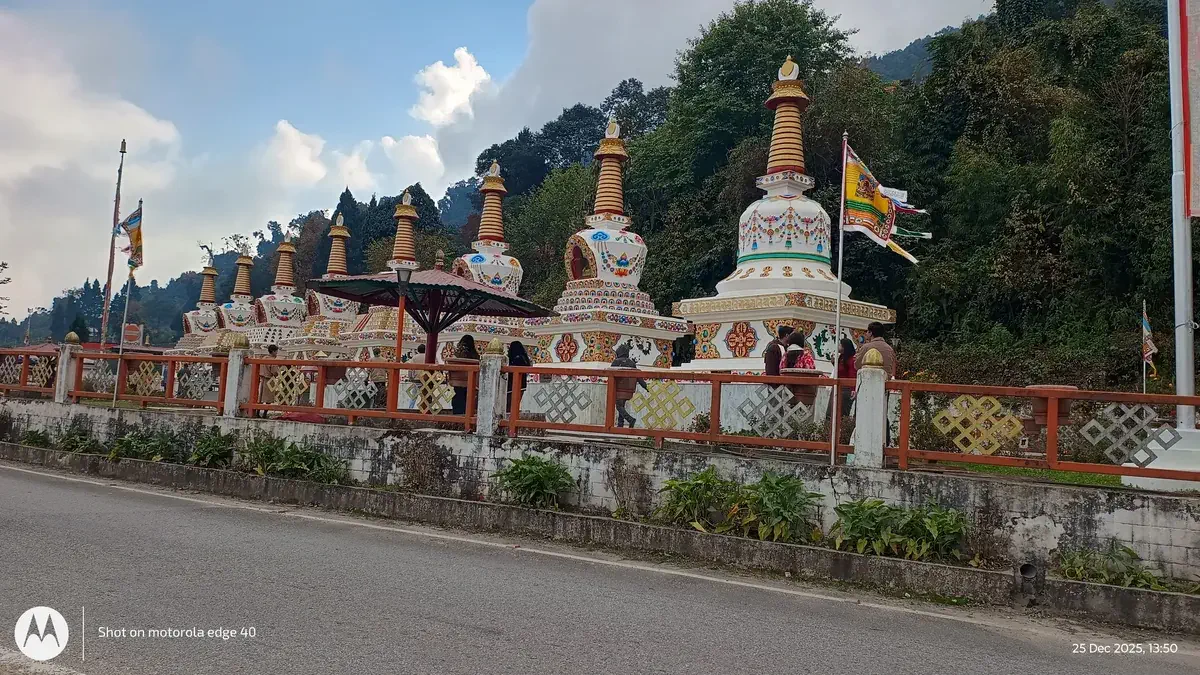
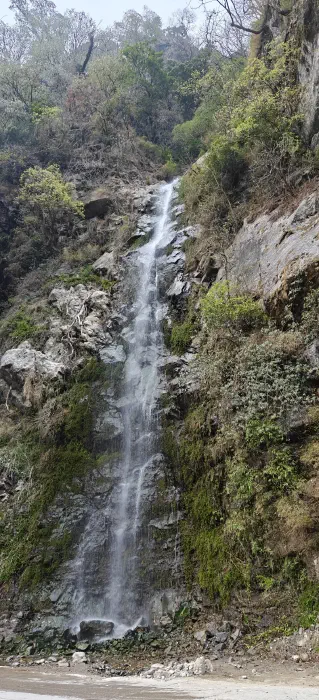
The air began to thin and sharpen, carrying the scent of damp earth and pine. Looking out the window of the bus, the world felt adventurous and raw. We passed the Eight Great Stupas in Gedu, shrouded in a windy, cloudy mist, and watched waterfalls weep down the valleys. At a small roadside stop, I had my first true encounter with Ema Datshi. The searing heat of the green chilies against the creamy cheese was a shock to the system, a perfect fire to combat the growing mountain chill. The excitement in the bus was palpable; we were no longer just traveling to a place—we were finally in it.

The City of Gentle Rhythms
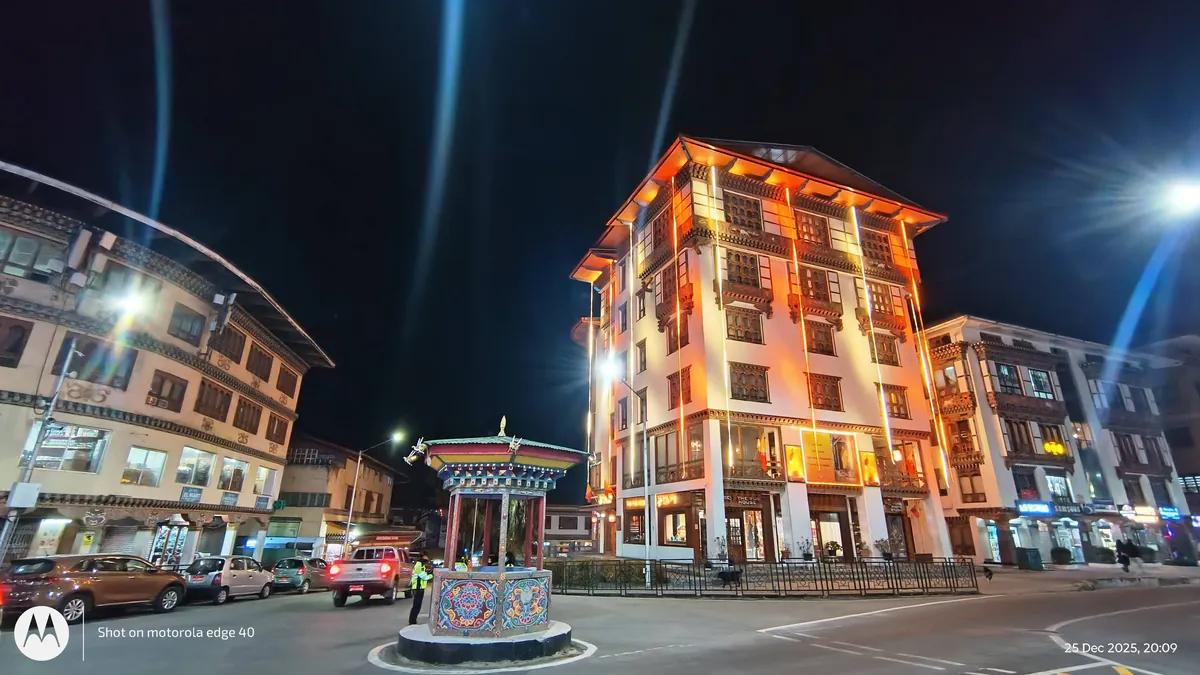
Entering Thimphu is a lesson in patience. There are no traffic lights here. Instead, there is a choreography of movement—a human rhythm at the zebra crossings where vehicles stop with a grace that feels foreign to anyone from a metropolis.
The architecture is a visual melody. Every building, from the sprawling government offices to the smallest shop, wears the same traditional “uniform” of painted wood and ornate eaves, yet each feels unique. The footpaths are wide, inviting you to forget your destination and just walk.
Finding Perspective at Buddha Point
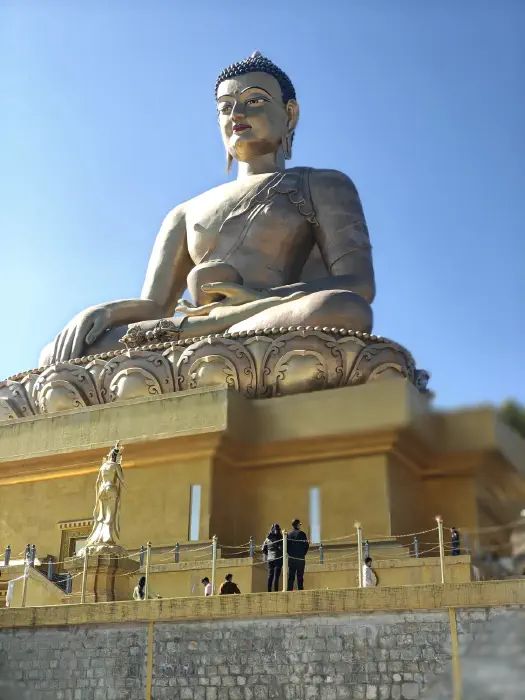
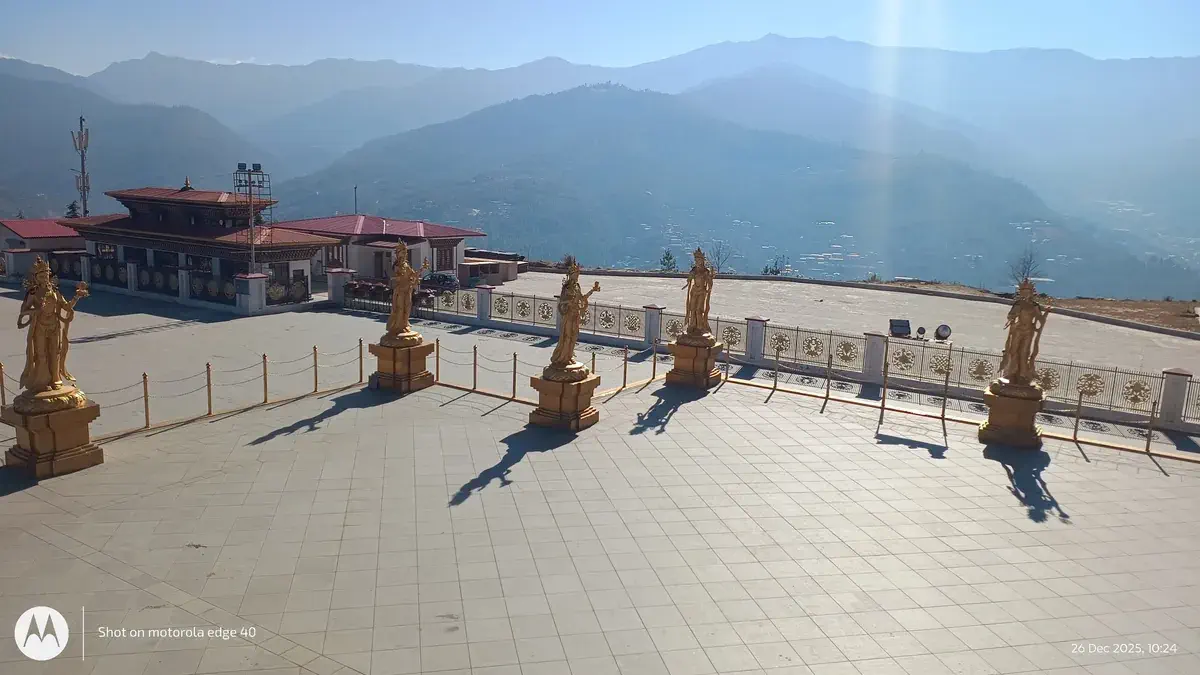
Standing at the feet of the Buddha Dordenma, you are forced to confront your own scale. The statue is majestic, golden, and immense, staring out over the valley with an expression of eternal neutrality.
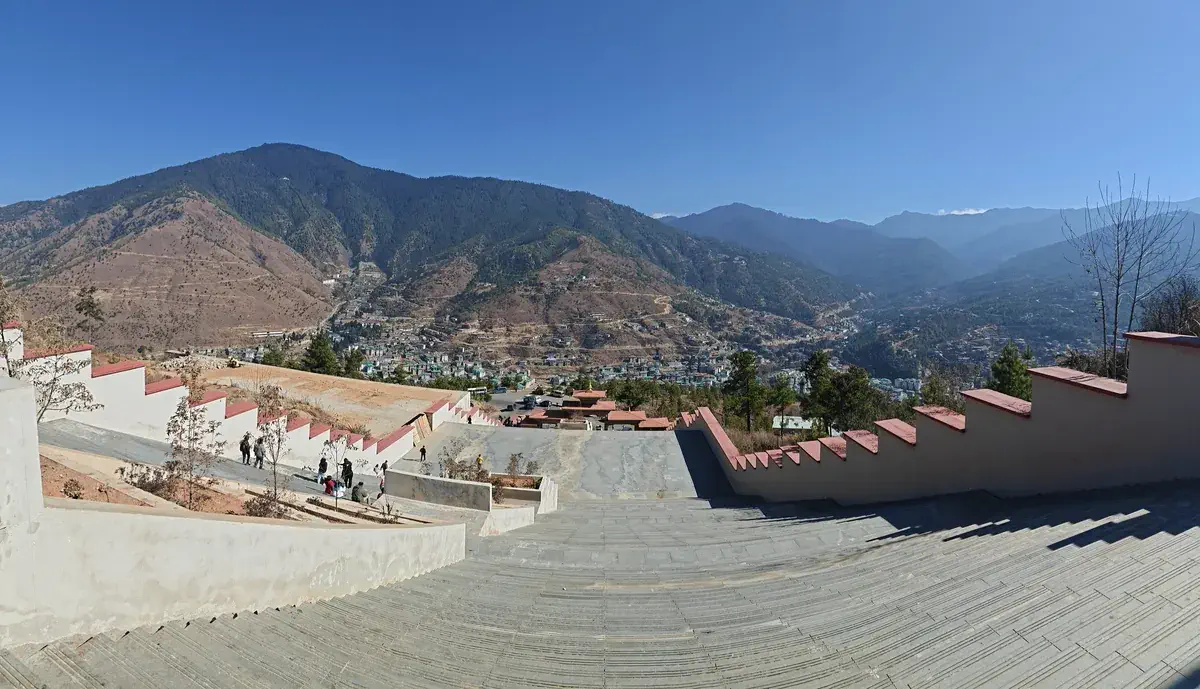
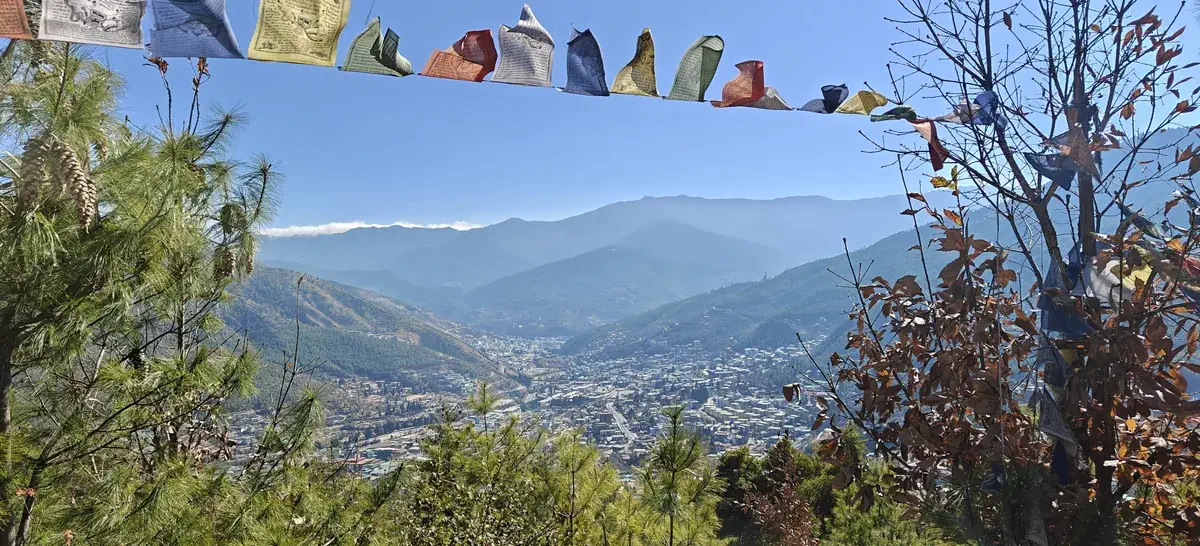
As the wind whipped around the viewpoint, looking down at the city tucked into the valley’s creases, I felt a profound sense of insignificance—but not in a way that hurt. It was the kind of insignificance that brings peace. It taught me that peace isn’t something that happens to you; it’s a choice you make in the shadow of something greater than yourself.
The Pulse of the People
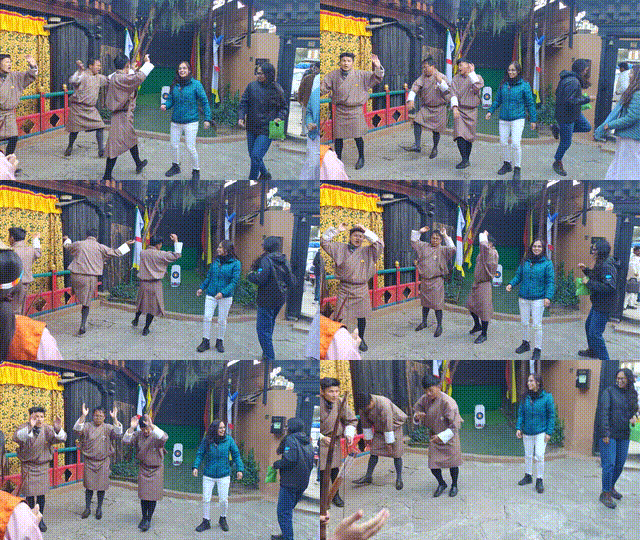
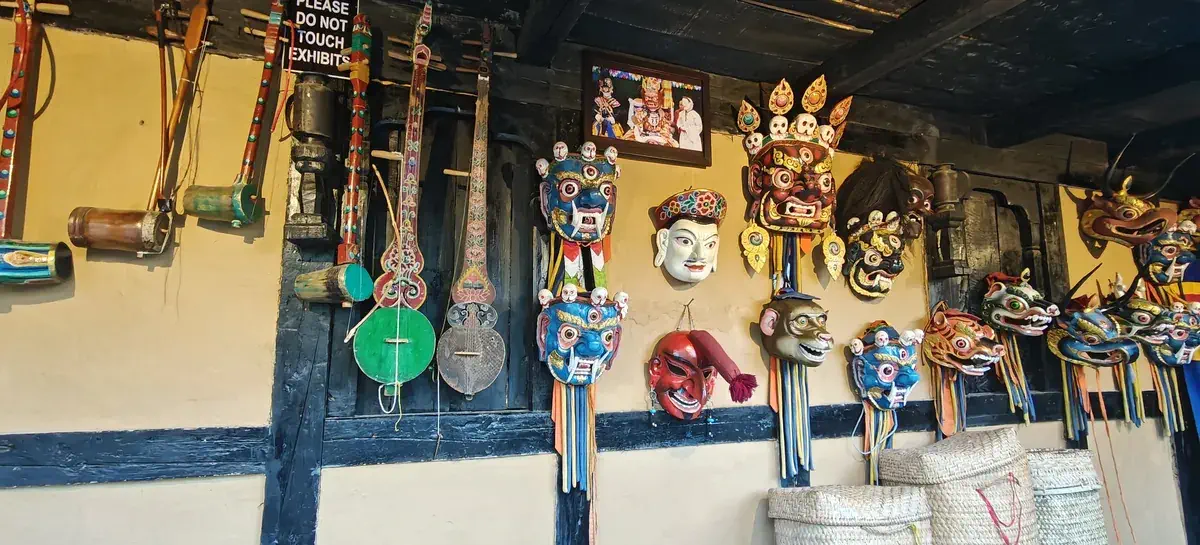
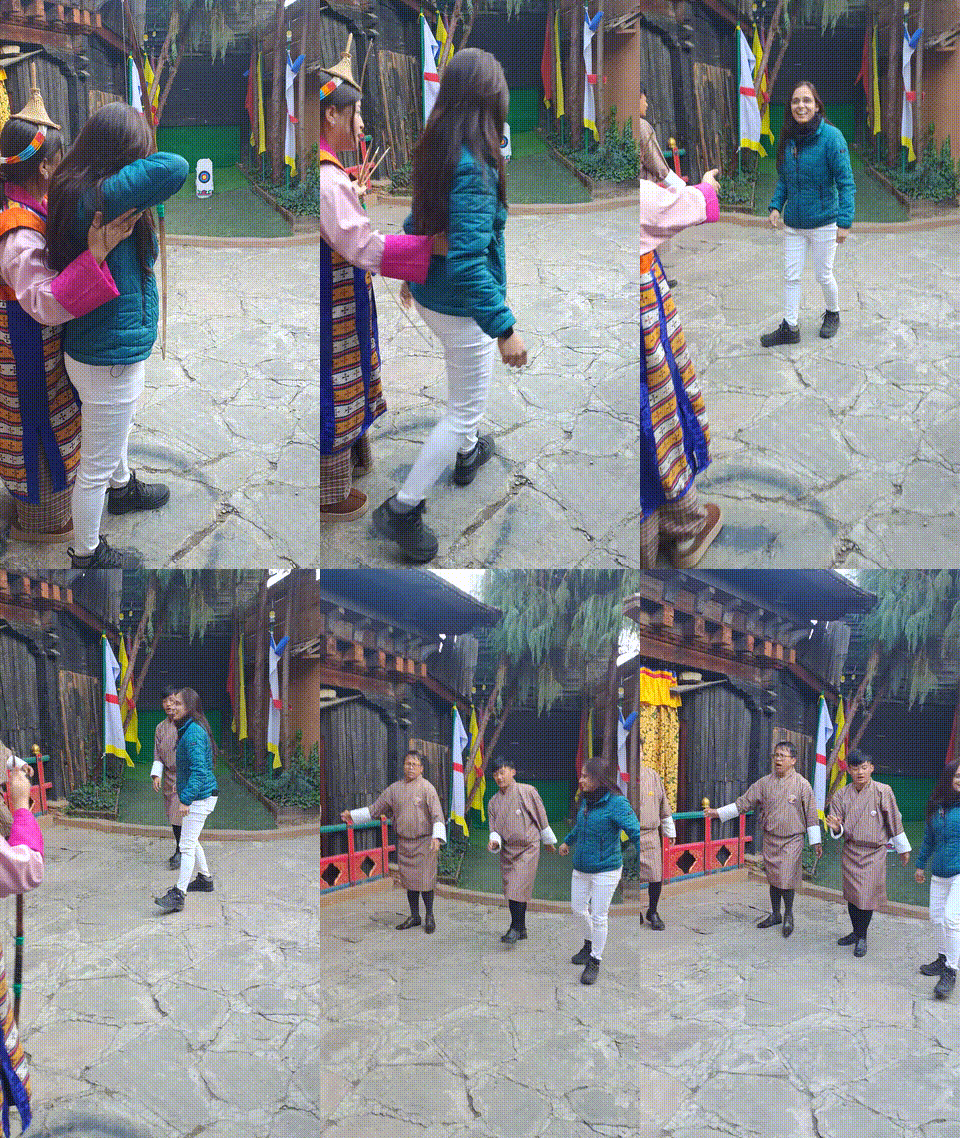 At Simply Bhutan, the museum felt less like a building and more like a warm home. We watched local dances that felt like ancient stories told through movement. I tried my hand at Archery, Bhutan’s national obsession.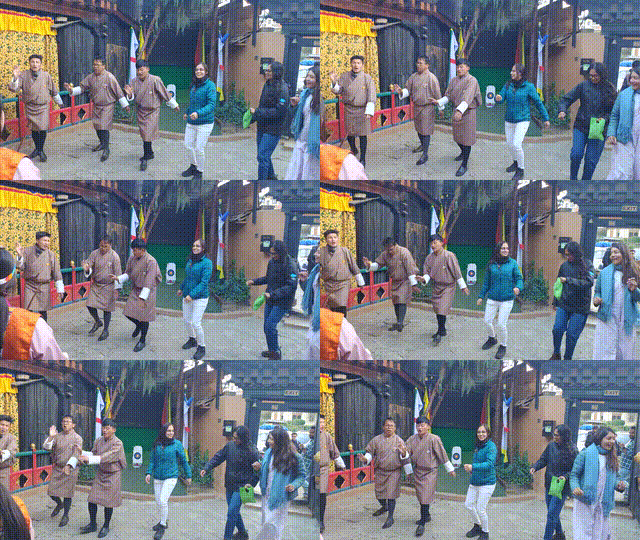
It looks so effortless when they do it, but the moment the bow is in your hand, you realize the immense focus required. When someone finally hit the target, the sudden burst of celebration and song from the locals was infectious—a reminder that joy here is a collective experience.
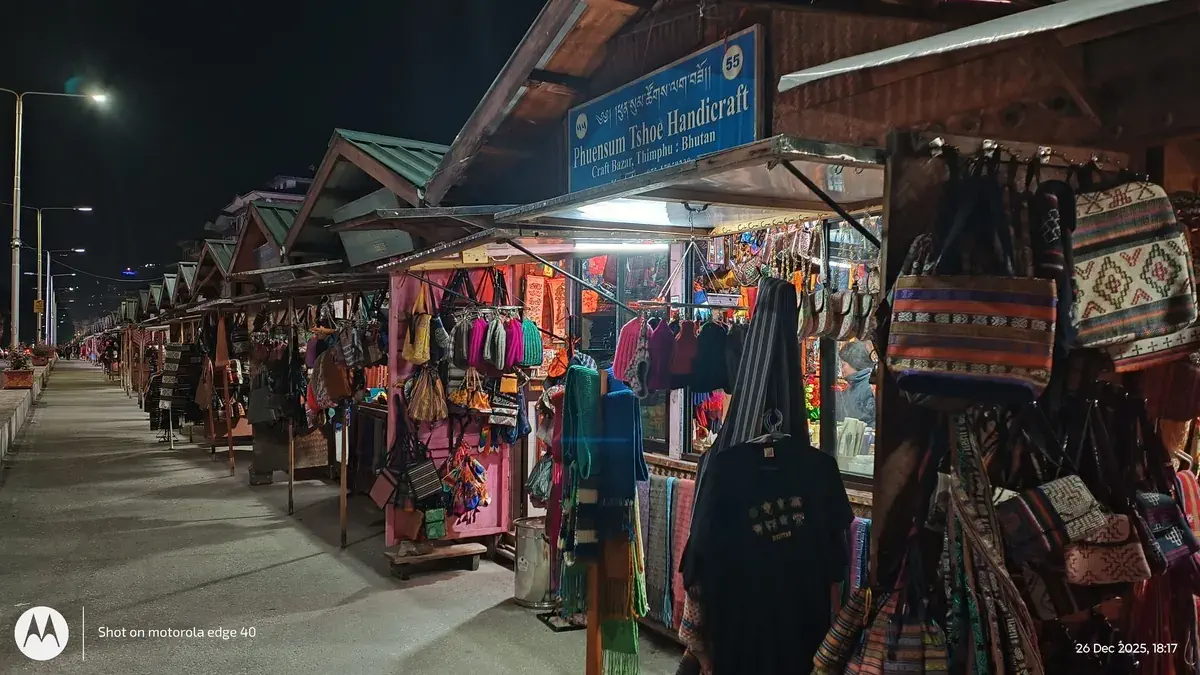
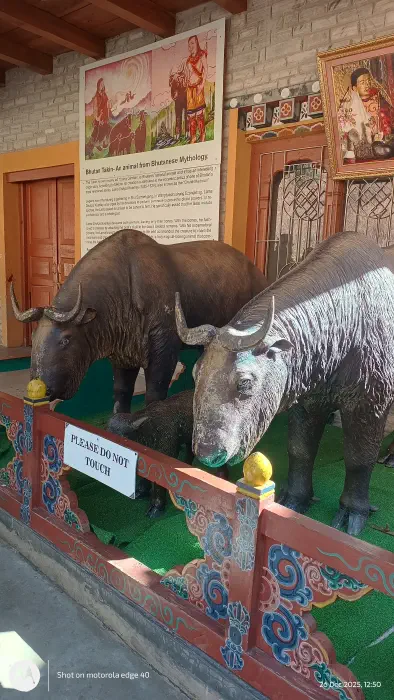
 Later, we wandered through the Handicraft Market, where the rows of souvenirs held the scent of cedar and dye. Even the Takin Reserve, with its strange, mythological national animals grazing in the forest, felt like a page out of a storybook.

Cafe Hopping and Clocktower Chills
As the temperature dipped toward 1°C, Thimphu’s cafe culture became our sanctuary. We spent a long afternoon at the Mountain Cafe, where the air was thick with the scent of fresh baking. I still remember the first bite of the burger there—unexpectedly perfect and incredibly satisfying in the mountain cold.
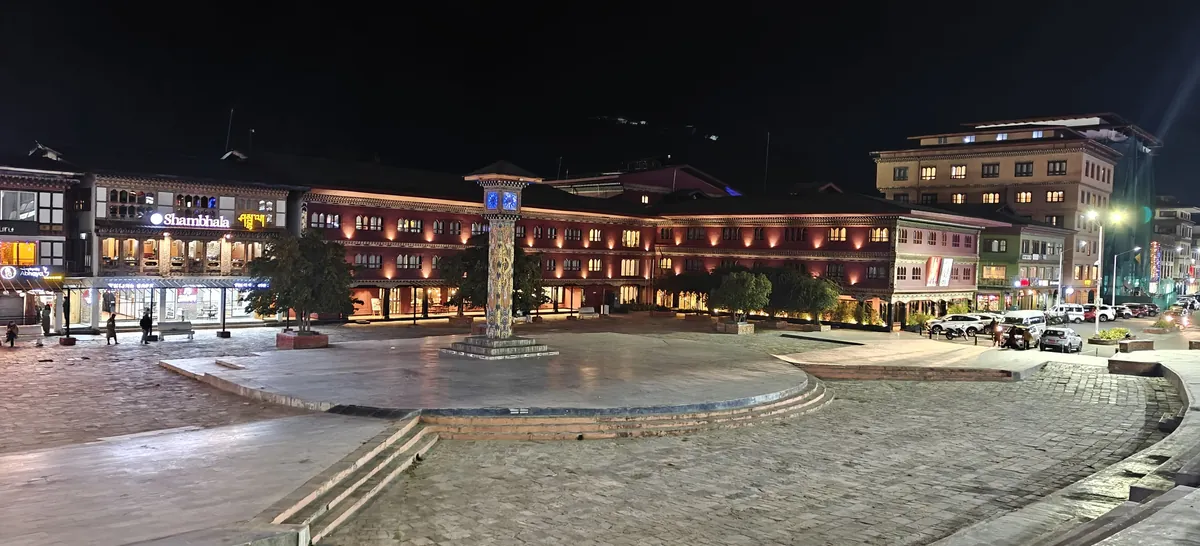
We found ourselves cafe hopping, moving from the warmth of Mountain Cafe to the cozy corners of Tower Cafe. Despite the freezing air, we couldn’t resist the ice cream near the Thimphu Clocktower. Eating something cold while the mountain wind bites at your face is a strange sort of joy.
The evening ended in the most unexpected way: Karaoke. In a small bar, we sat with locals who are massive fans of Bollywood. Singing old Hindi songs in the heart of Thimphu, miles away from home, the world felt incredibly small. Walking back, the streets were quiet, the clocktower stood tall, and there was no urge to rush. You just want to roam, to watch the light hit the valley, and to breathe. Thimphu doesn’t just host you; it quietens you.
Shall we move on to the Punakha chapter next, where we can talk about the river rafting and the warmth of the valley?
Next in my Bhutan journey: Punakha Adventures - rivers, rafting, and ancient fortresses.
📸 More Travel Photos
Explore our complete collection of travel photographs from various destinations
View Photo Gallery