Paro Chronicles: Of Sacred Cliffs and Sizzling Stones
A sensory journey through the Paro valley, from the rhythmic climb to Taktsang to the quiet steam of a traditional stone bath at 0 degrees.
- 3 min read

The Valley that Breathes
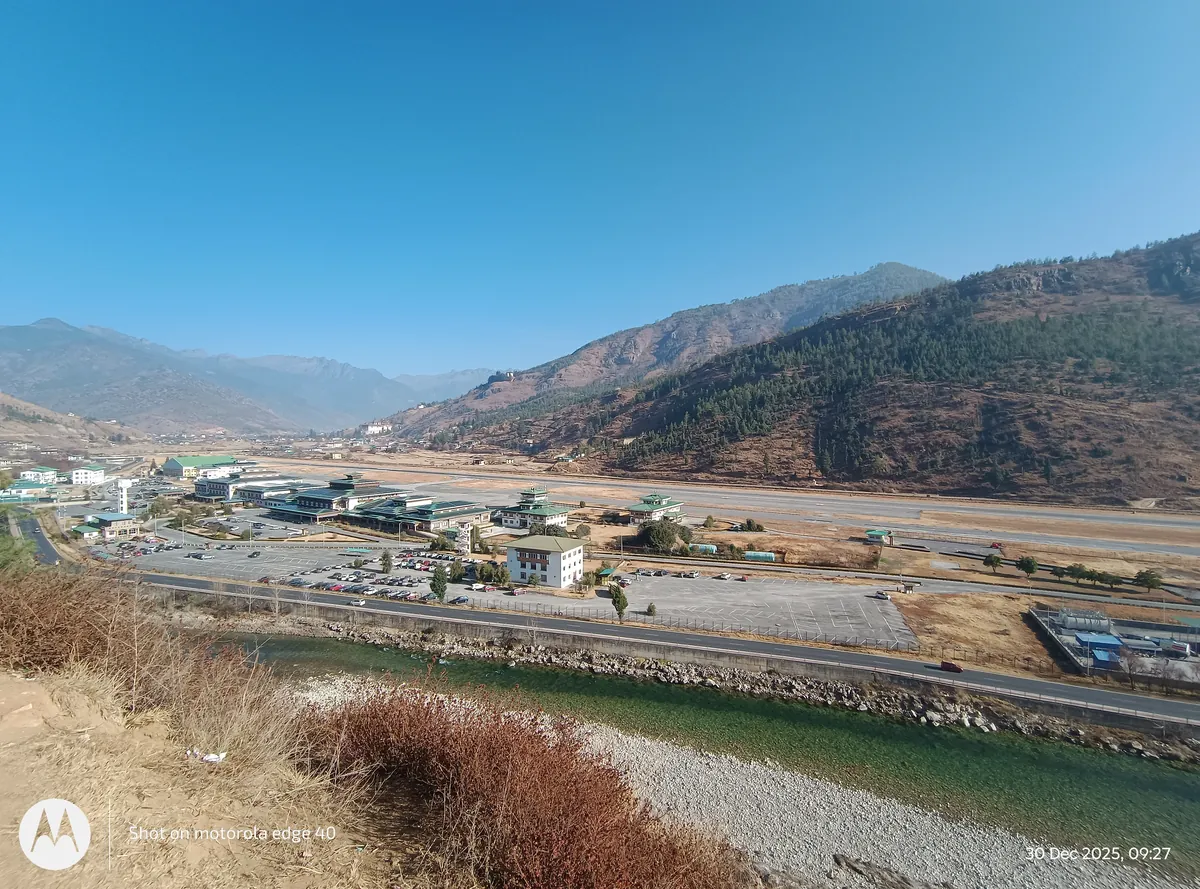
Paro doesn’t announce itself; it unfolds. We headed to the Airport Viewpoint in the crisp morning air to witness something rare. Watching a plane thread the needle between the massive peaks—landing at one of the world’s most challenging airports—felt like a metaphor for Bhutan itself: a delicate balance of modern precision and ancient geography. There is a specific kind of stillness here, even as the engines roar.
A Rhythm of Pine and Prayer: The Taktsang Climb
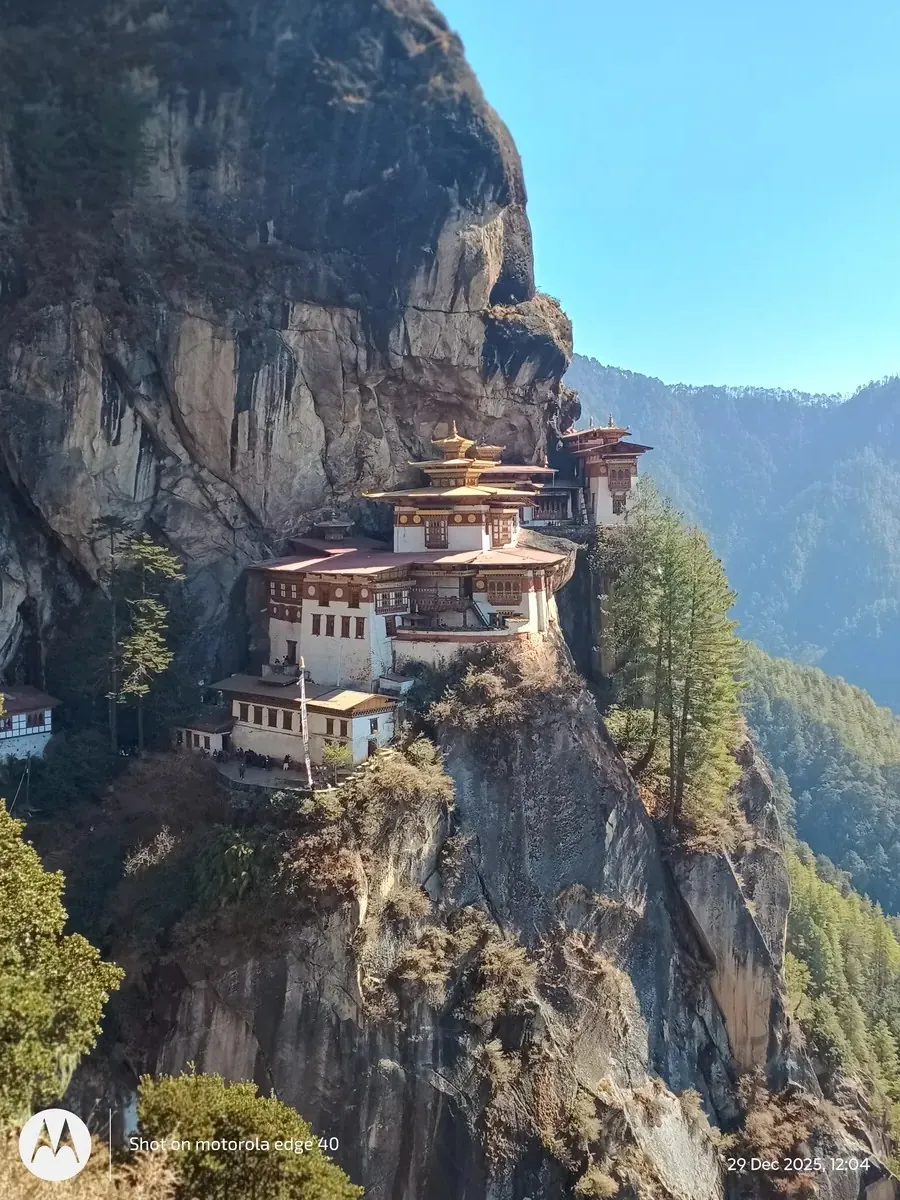
The path to the Tiger’s Nest is paved with the scent of sun-warmed pine needles and the distant, rhythmic creak of prayer wheels. As the incline grew steeper and the air thinner, I found myself in a silent dialogue with the mountain.
It was a grueling climb, but it brought a moment of clarity:
“मंज़िल की खूबसूरती का अंदाज़ा अक्सर रास्तों की मुश्किलों से ही लगाया जाता है”
Reaching the top wasn’t just about the view; it was a quiet realization of my own limits and a sudden, burning desire to stay fit, to ensure I can keep chasing these Himalayan heights for years to come. Inside the monastery, the cool darkness and whispered prayers made the world below feel like a distant dream.
The Alchemy of Fire and Water at 0°C
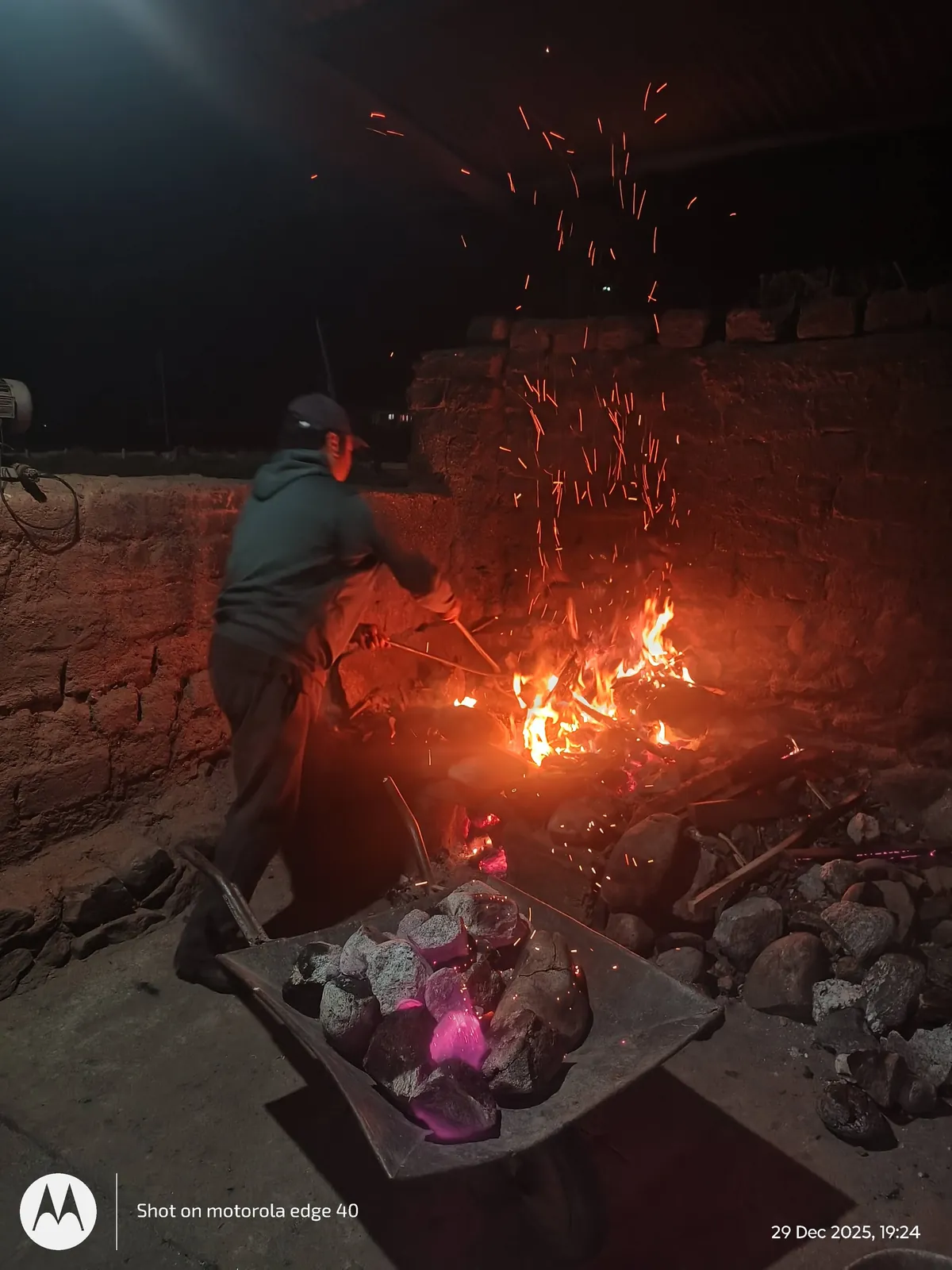
By late evening, the temperature had dropped to a biting 0°C. My limbs were leaden, and the valley was cloaked in a freezing mist. We found ourselves at a local home managed by a wonderful couple whose hospitality felt like a warm embrace.
This wasn’t a tourist “spa”; it was a local ritual. I watched the river stones, glowing orange from the wood fire, being dropped into the wooden chamber of the tub. As the water hissed into steam, our hosts served us Suja (salty butter tea) with Ouja (puffed rice), followed by a potent glass of Ara (local rice wine). Leaning back into the herb-infused heat while the world outside sat at freezing point was pure alchemy. The soreness didn’t just fade—it dissolved into the steam.
Textures of the Town: Bakeries and Bestsellers
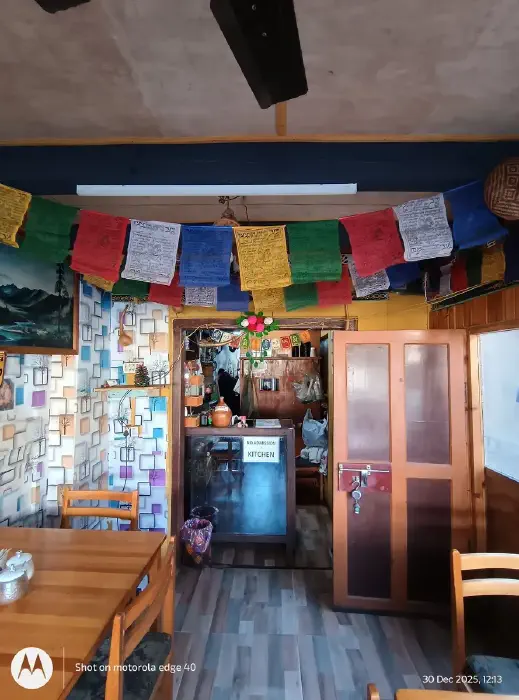
The streets of Paro are a playground for the senses. We spent our afternoons at the Mountain Cafe, losing ourselves in bakery delights, and then pivoted to the comforting saltiness of street food. There’s a peculiar joy in sitting by the Clocktower with a bowl of Jhol Momos or a steaming plate of Koka noodles and Wai Wai chat—the unofficial comfort foods of the mountains.
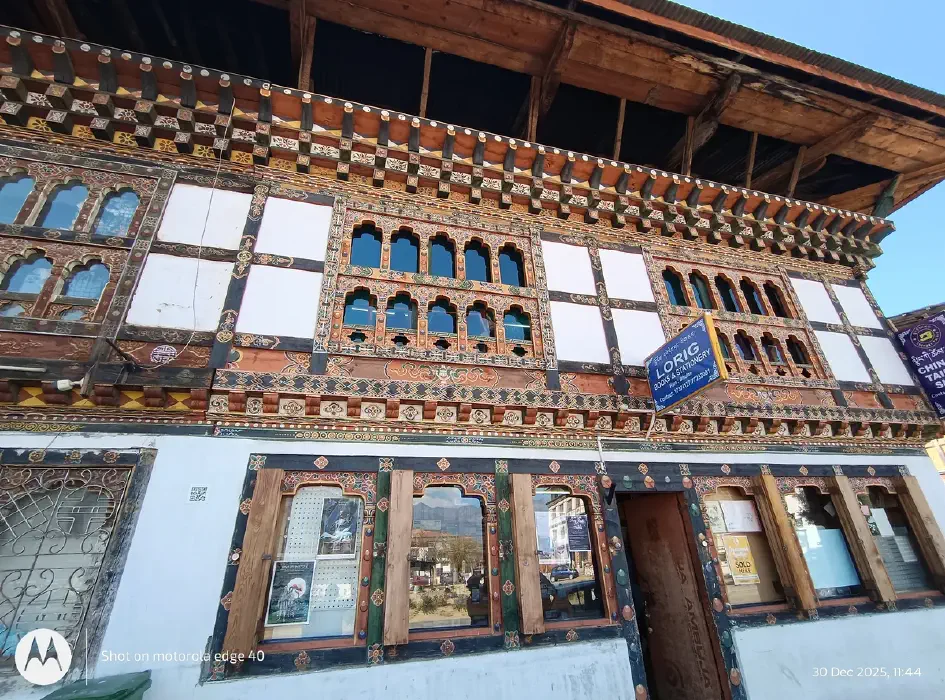
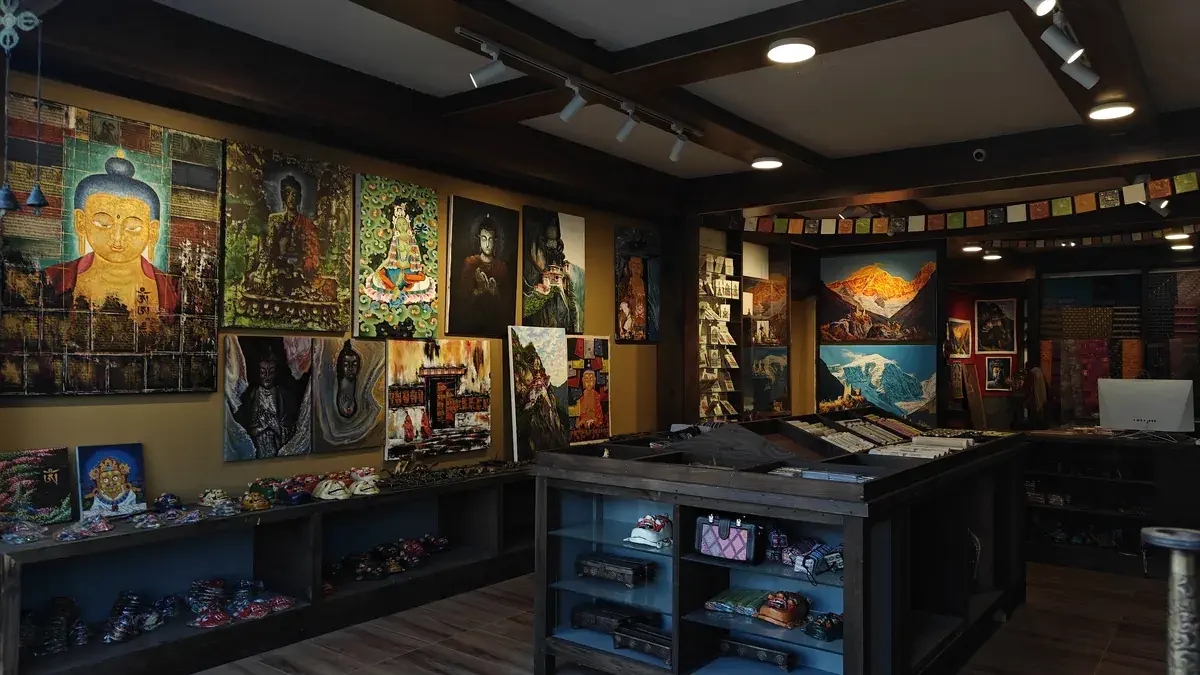
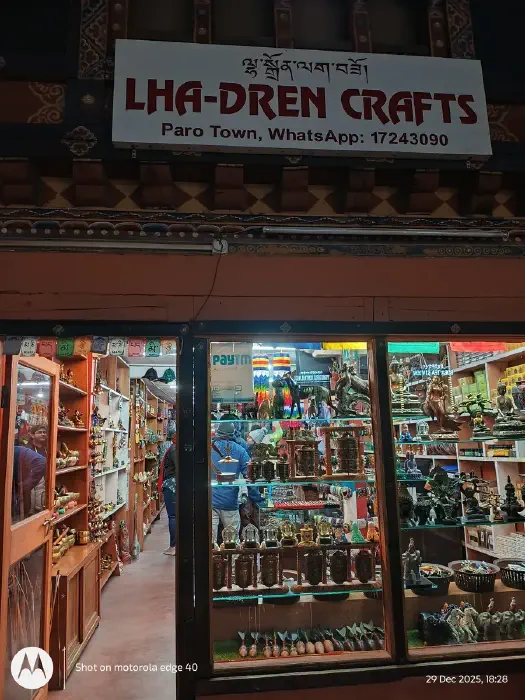
Between the river’s edge and the quiet valleys, I found a local bookstore and picked up a copy of Toshgyal. It felt like the perfect souvenir—a piece of Paro’s soul to take home.
Dressing in the traditional Gho and Kira with the majestic Paro Dzong as our backdrop was the final piece of the puzzle. With the help of locals who patiently showed us how to fold and tuck the heavy fabric, we didn’t just look like we belonged; for a moment, we felt like we did.
Stillness in Motion
As the sunlight hits the valley or the moon rises over the mountains, a profound calmness settles over Paro. You don’t want to “do” anything. You just want to roam, to watch the river flow, and to think.
Bhutan doesn’t ask anything of you. It simply offers a space to be quiet, to move slowly, and to find a bit of joy in the simple friction of stones, water, and wind. The road eventually leads back to the border, but the stillness of Paro is something I’m carrying back with me.
Next up: The winding road back to Phuentsholing and the transition back to the plains.
📸 More Travel Photos
Explore our complete collection of travel photographs from various destinations
View Photo Gallery